Top 10 Museums in the United Kingdom
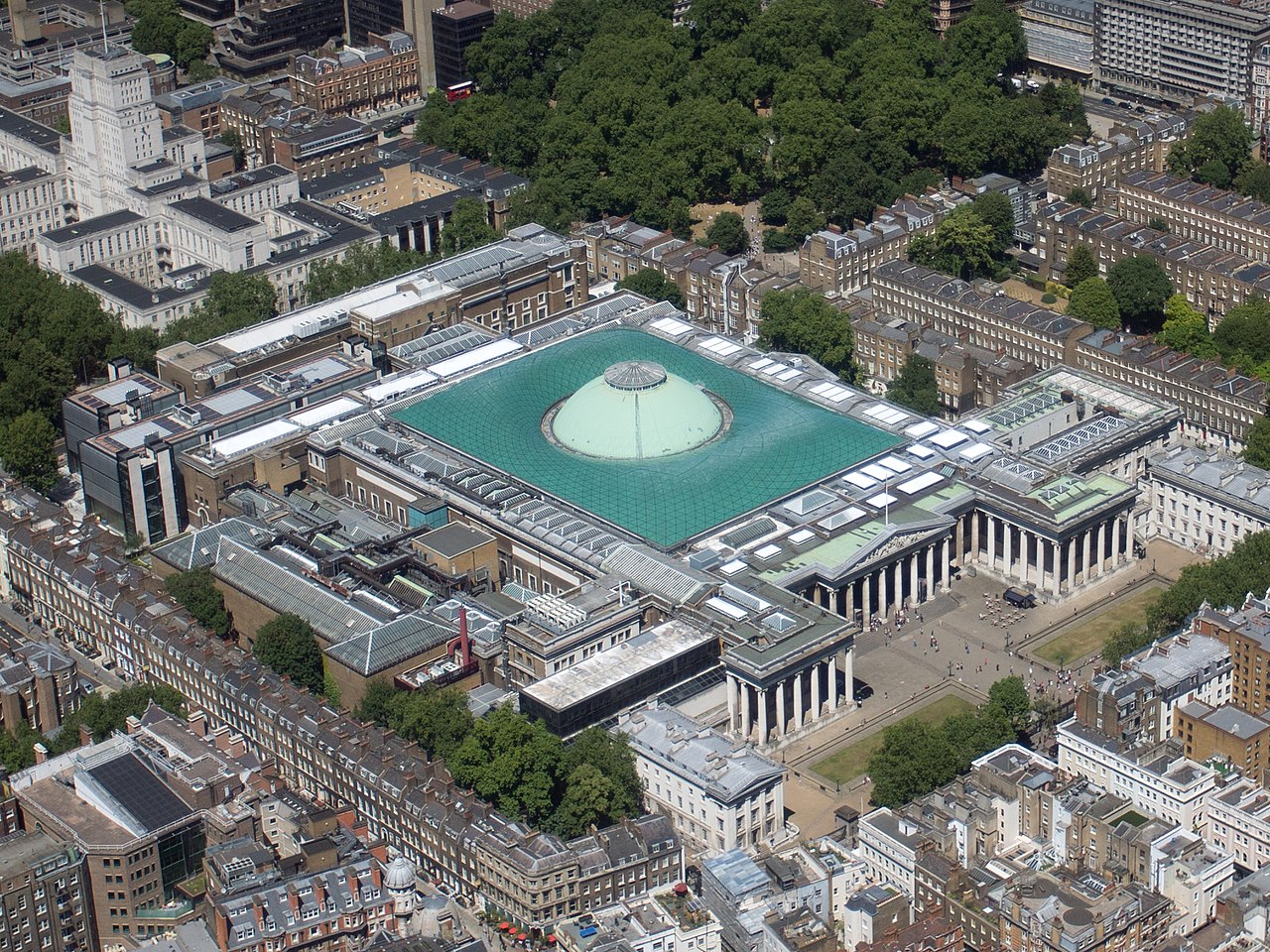
The United Kingdom's national museums are free to enter — a policy maintained since 2001 that has made them among the most visited in the world. The British Museum, the Natural History Museum, the V&A, and the National Gallery between them hold objects that would individually headline any collection on earth. Their concentrated position in London, reachable on the Underground and within walking distance of each other in South Kensington and Bloomsbury, makes the UK uniquely hospitable to museum travellers.
Find them all on the map.
1. British Museum, London
The British Museum in Bloomsbury, founded in 1753 on Hans Sloane's bequest and the first public national museum in the world, holds approximately eight million objects covering human history and culture from prehistoric times to the present. Its most significant single object is the Rosetta Stone — the granodiorite stele inscribed in 196 BCE with a decree of Ptolemy V in three scripts that allowed Jean-François Champollion to decode ancient Egyptian hieroglyphics in 1822. The museum also holds the Sutton Hoo helmet, the Lewis Chessmen, the Elgin (Parthenon) Marbles in the Duveen Gallery, and the complete reconstructed facades of the Nereid Monument and the Mausoleum at Halicarnassus. The Great Court — a glass-and-steel roof by Norman Foster, completed in 2000, enclosing the central courtyard — is one of the finest enclosed public spaces in Britain.
2. Victoria and Albert Museum, London
The V&A in South Kensington, founded in 1852 as the Museum of Manufactures to raise standards of British industrial design, holds over 2.8 million objects covering 5,000 years of applied art and design. The collection's breadth is genuinely unmatched: medieval Islamic ceramics, Raphael's Cartoon for the Sistine Chapel tapestries, the Great Bed of Ware, Tippu's Tiger (an eighteenth-century mechanical organ automaton in the form of a tiger mauling a British officer), fashion from the seventeenth century to the present, Rodin bronzes, and the Cast Courts — two nineteenth-century halls housing plaster casts of major European sculpture including a full-scale cast of Trajan's Column split into two halves. The Sackler Courtyard, a 2017 addition, expanded visitor facilities significantly.
3. National Gallery, London
The National Gallery on Trafalgar Square, founded in 1824 on the purchase of 38 paintings from the banker John Julius Angerstein, holds the UK's primary collection of Western European painting from 1250 to 1900: approximately 2,600 works. Its concentration of canonical masterpieces is exceptional — Van Eyck's Arnolfini Portrait, Holbein's The Ambassadors, Velázquez's Rokeby Venus, Vermeer's A Young Woman Standing at a Virginal, Turner's Fighting Temeraire, Van Gogh's Sunflowers (one of his five versions), Seurat's Bathers at Asnières. The Sainsbury Wing, added in 1991 to a design by Robert Venturi and Denise Scott Brown, holds the early Renaissance collection; the refurbishment of the main Wilkins building completed in 2024 improved visitor circulation significantly.
4. Tate Modern, London
Tate Modern in the former Bankside Power Station on the South Bank, opened in May 2000 in a conversion by Herzog and de Meuron, holds the UK's collection of international modern and contemporary art alongside Tate's British twentieth-century holdings. The Turbine Hall — 155 metres long and 35 metres high — hosts annual major commission installations that have included works by Louise Bourgeois (the inaugural Spider), Olafur Eliasson (The Weather Project, 2003-04), and Carsten Höller. The permanent collection covers Picasso's Weeping Woman, Dalí's Metamorphosis of Narcissus, Mark Rothko's Seagram Murals (a room designed in consultation with Rothko), and significant holdings of Arte Povera, Minimalism, and British Pop Art. The 2016 Switch House extension by Herzog and de Meuron added ten floors of additional gallery space.
5. Tate Britain, London
Tate Britain in Millbank — the original Tate Gallery, opened in 1897 — holds the most comprehensive collection of British art from 1500 to the present: approximately 70,000 works including the world's largest holdings of J.M.W. Turner (bequeathed by the artist in 1856), William Blake's illuminated books, the Pre-Raphaelite collection, and major works by Hockney, Bacon, Freud, and Bridget Riley. The Linbury Galleries, opened after a 2013 renovation, expanded display space for works from the permanent collection that had rarely been exhibited. The annual Turner Prize exhibition brings contemporary practice into dialogue with the institution's historic collection.
6. National Portrait Gallery, London
The National Portrait Gallery on St Martin's Place in London, founded in 1856 and the world's first gallery dedicated to portraiture, closed in 2020 for a three-year renovation and reopened in June 2023 with completely reinstalled galleries. The collection covers approximately 11,000 portraits of significant British figures from the Tudor period to the present, including the Chandos Portrait of Shakespeare (the earliest and most likely authentic portrait), the Darnley Portrait of Elizabeth I, and the collection of nineteenth- and twentieth-century photographs that has become one of the most-used archives in British visual culture. The renovated building by Jamie Fobert Architects added a rooftop restaurant with views across Trafalgar Square.
7. Imperial War Museum, London
The Imperial War Museum in Lambeth, founded in 1917 during the First World War and housed in the former Bethlem Royal Hospital since 1936, covers all aspects of modern conflict from the First World War to the present, with particular depth in British and Commonwealth involvement. The Holocaust Galleries, reopened after a major renovation in 2021, are among the most carefully designed and emotionally considered presentations of Holocaust history in any museum in the world. The atrium holds large-scale hardware — a Spitfire, a V2 rocket, a midget submarine — suspended from the roof; the art collection, built on wartime commissions to Paul Nash, Stanley Spencer, John Singer Sargent, and others, is one of the finest collections of twentieth-century figurative art in the country.
8. Natural History Museum, London
The Natural History Museum in South Kensington, in Alfred Waterhouse's spectacular Romanesque terracotta building opened in 1881, holds 80 million natural history specimens covering the history of life on earth. The Hintze Hall — the central nave, 49 metres long — was refurbished in 2017 to replace the iconic Diplodocus cast (Dippy, now on tour around UK regional museums) with the skeleton of a 25-metre blue whale suspended from the ceiling. The museum's Darwin Centre, a 2009 addition by C.F. Møller, makes approximately 17 million zoological and entomological specimens visible to the public through glass-walled storage. The Wildlife Photographer of the Year exhibition, held annually in the Natural History Museum, is the most-attended temporary photography exhibition in the UK.
9. Science Museum, London
The Science Museum in Exhibition Road, South Kensington, founded in 1857 as part of the same South Kensington project that produced the V&A and Natural History Museum, holds over 400,000 objects covering the history of science, technology, engineering, and medicine. Its Making the Modern World gallery uses 2,000 original objects — George Stephenson's Rocket locomotive (1829), the Apollo 10 command capsule, Watson and Crick's original DNA model (1953), and the first programmable computer, Colossus, in partial replica — as anchors for narratives about industrialisation and technological change. The IMAX cinema and the Wonderlab interactive science gallery extend the museum's appeal beyond conventional object display.
10. Ashmolean Museum, Oxford
The Ashmolean Museum on Beaumont Street in Oxford, opened in 1683 and the world's oldest university museum still in operation, holds collections ranging from ancient Egyptian objects and Greek antiquities to Pre-Raphaelite paintings, Chinese ceramics, and the lantern that Guy Fawkes is said to have carried. The original donation came from Elias Ashmole, who gave John Tradescant the Elder's curiosity cabinet — itself one of the earliest systematic collections in England — to the University of Oxford. The building was redeveloped and greatly expanded in a 2009 project by Rick Mather Architects. The Ashmolean's particular strengths include its Raphael drawings, the Alfred Jewel (a ninth-century Anglo-Saxon object in gold, enamel, and rock crystal), and its Minoan and Cycladic collections from Arthur Evans's excavations.