Top 10 Museums in Japan
Japan's museums are among the most varied in the world: ancient court objects and Buddhist sculpture displayed with exacting precision at the Tokyo and Kyoto National Museums; outdoor sculpture parks in the Hakone hills; immersive digital art environments in the Tokyo waterfront; and the pilgrimage island of Naoshima, where a cluster of Tadao Ando buildings has become one of the most-visited museum destinations in Asia. Many Japanese museums close on Mondays; arrival times matter at the most popular venues.
Explore all of them on the map.
1. Tokyo National Museum, Ueno
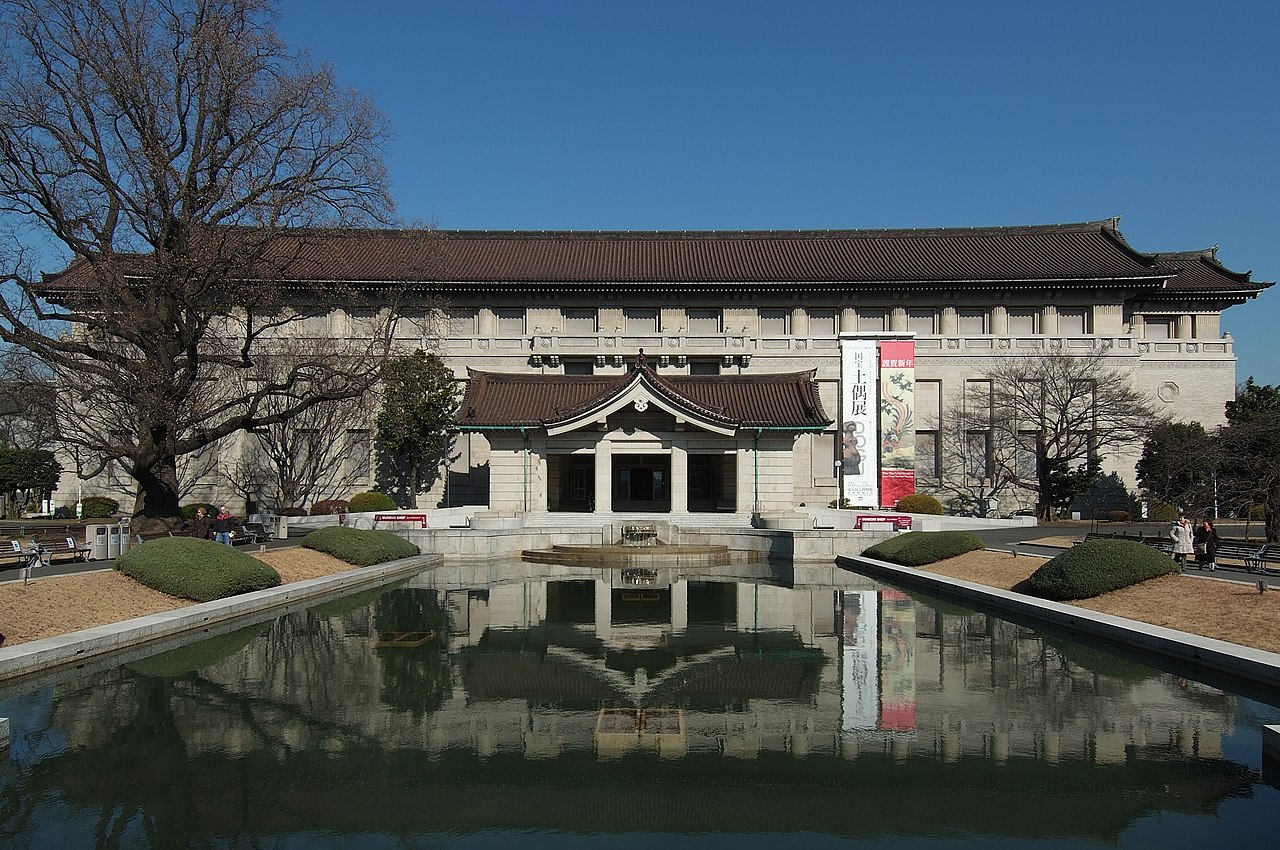
The Tokyo National Museum, founded in 1872 and the oldest and largest museum in Japan, holds approximately 120,000 objects covering Japanese art and archaeology from prehistoric Jomon culture through the Edo period. The Honkan (Japanese Gallery), a 1938 building by Jin Watanabe, displays the museum's Japanese art collection across 24 galleries in a progressive sequence from prehistoric through medieval. The Toyokan (Asian Gallery) holds Chinese bronzes, Korean celadons, Indian sculpture, and Central Asian objects. The museum holds 89 national treasures and 648 important cultural properties; the current national treasure gallery rotates displays regularly. Open Tuesday to Sunday; admission charged.
2. National Museum of Modern Art, Tokyo (MOMAT)
The National Museum of Modern Art, Tokyo — MOMAT — in Kitanomaru Park near the Imperial Palace, opened in 1969 in a building designed by Yoshiro Taniguchi and holds approximately 13,000 works of Japanese and international modern art from the Meiji period (1868) to the present. Its permanent collection gallery on the fourth floor is structured as a reverse chronological descent from the present to the 1900s, with a final room offering expansive views over the Imperial Palace moat. The museum's strength in twentieth-century Japanese painting — Yokoyama Taikan, Kishida Ryusei, Kume Keiichiro — provides context for the development of a distinctly Japanese modern tradition alongside Western influence. Closed Mondays.
3. Mori Art Museum, Tokyo
The Mori Art Museum on the 53rd floor of Roppongi Hills Mori Tower, opened in 2003, holds no permanent collection. Its model — large-scale temporary exhibitions of contemporary Asian art alongside international names — has made it one of the most visited contemporary art institutions in Asia, helped by its late opening hours (until 10 p.m. most nights, midnight on some days) and the combination of art admission with an observation deck ticket that draws visitors beyond the standard museum-going public. Exhibitions have ranged from major Yayoi Kusama retrospectives to group shows examining contemporary Indonesian and Thai art. Open daily.
4. Hakone Open-Air Museum
The Hakone Open-Air Museum, opened in 1969 as Japan's first open-air sculpture park and set in a valley in the Fuji-Hakone-Izu National Park, displays 120 outdoor sculptures by Henry Moore, Auguste Rodin, Picasso, Calder, and others across a 70,000-square-metre hillside landscape with views of the surrounding mountains. The Picasso Pavilion holds over 300 works by Picasso in all media — one of the largest Picasso collections in Asia. The museum also displays its collection amid hot spring foot baths, which can be used by visitors. Accessible from Tokyo in under 90 minutes via the Romancecar express. Open daily; admission charged.
5. Chichu Art Museum, Naoshima
The Chichu Art Museum, designed by Tadao Ando and opened in 2004 on Naoshima Island in the Seto Inland Sea, holds a permanent collection of five works: three large Water Lilies canvases by Claude Monet, a room installation by James Turrell, and Walter De Maria's Time/Timeless/No Time — a 2.2-metre polished granite sphere surrounded by 27 gilded geometric forms. All galleries are underground, carved into the hillside in Ando's characteristic board-formed concrete, and lit exclusively by natural light from above. Visitor numbers are strictly limited; tickets must be booked in advance. The island also holds Ando's Lee Ufan Museum and the Benesse House museum hotel, making Naoshima a full-day pilgrimage for museum architecture.
6. teamLab Planets, Tokyo
teamLab Planets in Toyosu, Tokyo — a sister venue to the now-relocated teamLab Borderless — is an immersive digital art installation covering 10,000 square metres across four major works and two garden spaces. Visitors walk barefoot through water and into rooms where digital projections of flowers, water surfaces, and light configurations respond to movement. The technical infrastructure — 520 computers, 470 projectors — produces effects that no conventional gallery space can replicate. teamLab Planets is the most-visited art institution in Japan by annual attendance and among the most-visited in the world. Book timed entry well in advance; sold out weeks ahead during school holidays.
7. Kyoto National Museum
The Kyoto National Museum in Higashiyama-ku, founded in 1897 in a Meiji-era French Renaissance building by Tokuma Katayama (the Meiji Kotokan, now used for special exhibitions), holds approximately 12,000 objects covering Kyoto's millennium as Japan's imperial capital. The Heisei Chishinkan Wing, a 2014 building by Taniguchi and Associates, provides contemporary gallery space for the permanent collection of Japanese painting, sculpture, metalwork, lacquerware, ceramics, and textiles. The museum's strength in Buddhist sculpture — wooden figures from the Heian and Kamakura periods — is unrivalled outside specialist temple collections. Closed Mondays; special exhibitions require separate tickets.
8. Nara National Museum
The Nara National Museum, founded in 1895 near Nara Park, specialises in Buddhist art from the Asuka through the Edo periods and holds one of the finest collections of Buddhist sculpture and ritual objects in Japan. The Nara Buddhist Sculpture Hall displays over 100 sculptures in a building that recreates the aesthetic of a Japanese treasure house. The museum is also the host venue for the annual Shosoin Exhibition in October-November, when a selection of the 9,000 imperial treasures from the Shosoin Repository — eighth-century objects presented to the Todaiji temple by Empress Komyo — are displayed to the public for two weeks. This is one of the most remarkable temporary exhibitions in any museum in the world; tickets are allocated by lottery.
9. Miho Museum, Shiga
The Miho Museum in the Shigaraki hills of Shiga Prefecture, designed by I.M. Pei and opened in 1997, is approached through a 157-metre tunnel in the hillside that opens to a view of a glass and steel building partially buried in the mountain. The collection, assembled by the Shinji Shumeikai religious organisation, covers ancient art from Egypt, Greece, Rome, Persia, South Asia, China, and Japan across a series of naturally lit galleries. The combination of exceptional collection quality with one of the world's most theatrical approach sequences makes the Miho one of the architecturally memorable museums anywhere. Access is by shuttle bus from Shin-Miho-Yamaguchi station; closed Mondays.
10. Edo-Tokyo Museum (Temporarily Closed)
The Edo-Tokyo Museum in Sumida, Tokyo — a 1993 building by Kiyonori Kikutake that elevates its main galleries on piloti 43 metres above street level, referencing traditional raised-floor architecture — was closed in 2022 for a renovation expected to last until 2025 or 2026. Before closure, it held one of the most comprehensive presentations of Edo-period and modern Tokyo life: full-scale reconstructions of Edo-period townhouses, a replica of the Nihonbashi bridge, and dioramas of the 1923 earthquake and 1945 fire-bombing. It is included here because it will reopen and because its account of Tokyo's urban history is irreplaceable; confirm reopening status before planning a visit.